

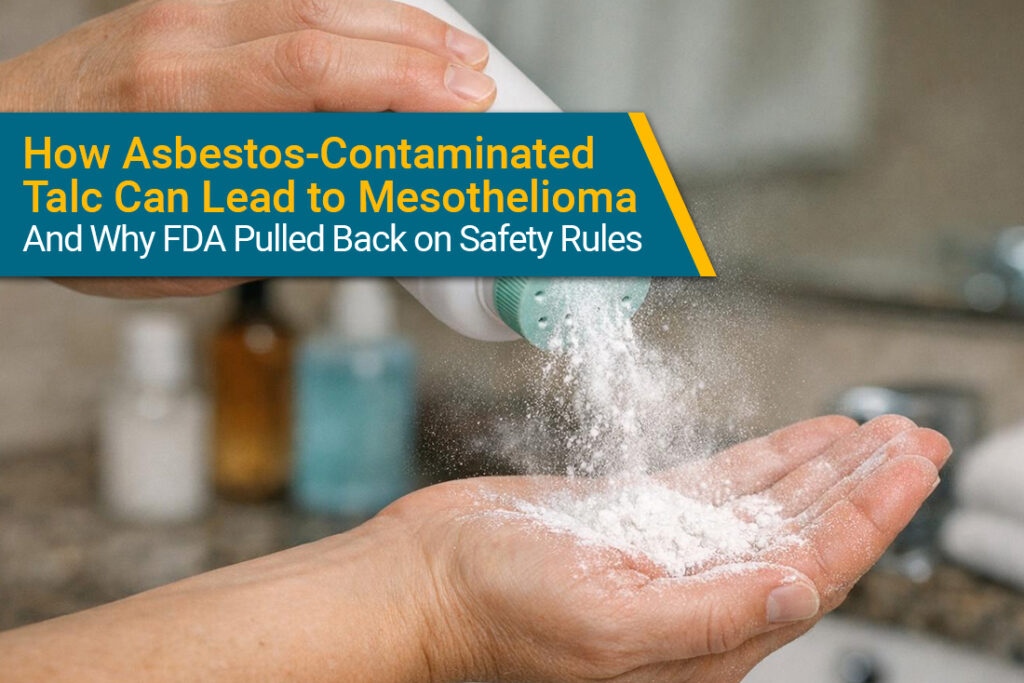
For decades, asbestos exposure has been linked to devastating diseases, including mesothelioma, a rare and aggressive cancer with no cure. While asbestos is often associated with industrial job sites and construction materials, a lesser-known — but deeply concerning — source of exposure is talc, a mineral widely used in cosmetics and personal care products.
Talc and asbestos naturally occur side by side in the earth, meaning talc can become contaminated during mining if strict testing and quality controls are not in place. This risk has fueled years of litigation, public health warnings, and regulatory scrutiny. Recently, however, the U.S. Food and Drug Administration (FDA) withdrew a proposed rule that would have required standardized asbestos testing for talc-containing products, raising new concerns among health advocates, scientists, and mesothelioma experts.
Understanding how asbestos-contaminated talc can lead to mesothelioma — and why federal safety rules are now in limbo — is critical for consumers and patients alike.
What Is Talc and Why Can It Contain Asbestos?
Talc is a naturally occurring mineral used in a wide range of products, including makeup, baby powder, body powders, and other personal care items. It is valued for its ability to absorb moisture and reduce friction.
The problem lies in where talc is found. Talc and asbestos often form in the same geological environments, meaning asbestos fibers can be present in talc deposits. If talc is not carefully sourced and rigorously tested, asbestos contamination can go undetected.
This contamination is not the result of poor manufacturing practices — it is a geological reality. Without standardized, sensitive testing methods, microscopic asbestos fibers may remain in finished products, posing an inhalation risk during normal use.
How Asbestos Exposure Causes Mesothelioma
Asbestos fibers are extremely small and durable. When inhaled or ingested, they can become permanently lodged in the body. Over time, these fibers cause chronic inflammation, tissue scarring, and cellular damage.
Mesothelioma develops when asbestos fibers irritate the mesothelial lining of organs, most commonly the lungs. One of the most troubling aspects of this disease is its long latency period: Symptoms may not appear for 20–50 years after exposure.
Medical experts agree there is no safe level of asbestos exposure. Even low-dose, repeated exposure — such as daily use of talc-based cosmetics — may increase the risk of mesothelioma, especially when exposure occurs in enclosed or poorly ventilated spaces.
The FDA’s Proposed Talc Asbestos Testing Rule
In response to growing evidence and public concern, U.S. Congress passed the Modernization of Cosmetics Regulation Act (MoCRA), directing the FDA to strengthen oversight of cosmetic safety. As part of that effort, the FDA proposed a rule in 2024 that would have required standardized testing methods to detect and identify asbestos in talc-containing cosmetic products.
The proposal aimed to close regulatory gaps by establishing consistent testing standards and improving consumer protection. Advocates viewed the rule as a long-overdue step toward preventing asbestos exposure in everyday products.
Why the FDA Pulled Back on Talc Safety Rules
Despite the momentum toward stronger oversight, the FDA withdrew the proposed rule in late 2025 before it could be finalized. The agency cited feedback from public comments, including concerns about the scope of the rule, potential unintended consequences, and implementation challenges.
However, the decision sparked immediate criticism from health advocates and consumer safety groups. Critics argue that withdrawing the rule leaves consumers vulnerable and undermines the intent of Congress to strengthen cosmetic safety protections under MoCRA.
For those concerned about asbestos-related cancers like mesothelioma, the withdrawal represents a significant setback in efforts to reduce preventable exposure.
Why This Matters to Mesothelioma Patients and Families
Many mesothelioma patients were exposed to asbestos unknowingly and without warning. When exposure comes from consumer products — rather than industrial workplaces — it raises serious questions about transparency, accountability, and prevention.
Talc-containing cosmetics were used daily, sometimes for years or decades, by adults on themselves and their children. Without mandatory testing requirements, companies are largely left to self-regulate, and testing practices may vary widely.
For patients already diagnosed with mesothelioma, the FDA’s decision can feel like a missed opportunity to protect future generations from the same fate.
What Consumers Can Do Now
Until stronger regulations are in place, consumers concerned about asbestos exposure can take proactive steps to reduce risk:
- Choose talc-free cosmetics and personal care products whenever possible.
- Look for brands that disclose independent third-party asbestos testing.
- Stay informed about regulatory updates, recalls, and safety alerts.
- Document any history of talc use as part of their medical and legal records.
Mesothelioma is a devastating disease with a well-established cause: asbestos exposure. When asbestos-contaminated talc remains unregulated, the risk of exposure extends beyond workplaces and into everyday life.
The FDA’s decision to pull back on mandatory talc asbestos testing has renewed concerns about consumer safety and cancer prevention. As regulatory uncertainty continues, awareness, transparency, and informed choices remain essential tools in protecting public health — and preventing future cases of mesothelioma.

Categories: